At the studio
Studio sessions, one to one.
The method as it was meant to be taught: one instructor, one reformer, one person on it, and an hour built entirely around that person.
What the method is
Joseph Pilates called his system Contrology, and the name is still the clearest description anyone has managed: the conscious control of the body through movement. Every exercise has an order, a reason and an exact shape, and the measure was never how hard it looked — it was how precisely it could be done, and what that precision changed in everything else.
Six principles hold it together: concentration, control, centering, breath, precision and flow. They are not slogans. They are why a cue lands where it does, why an exercise gets stopped and restarted, and why the work transfers off the machine at all. The reformer is what makes them teachable — its springs assist a movement you cannot yet do alone and resist one you have outgrown, so nothing gets skipped. It gets scaled.
Why private changes the whole thing
In a room full of reformers, the session is designed for the average of everyone in it. The cues are general because they have to be, the pace belongs to the group, and a correction that would have changed everything for you arrives three exercises later, if it arrives at all.
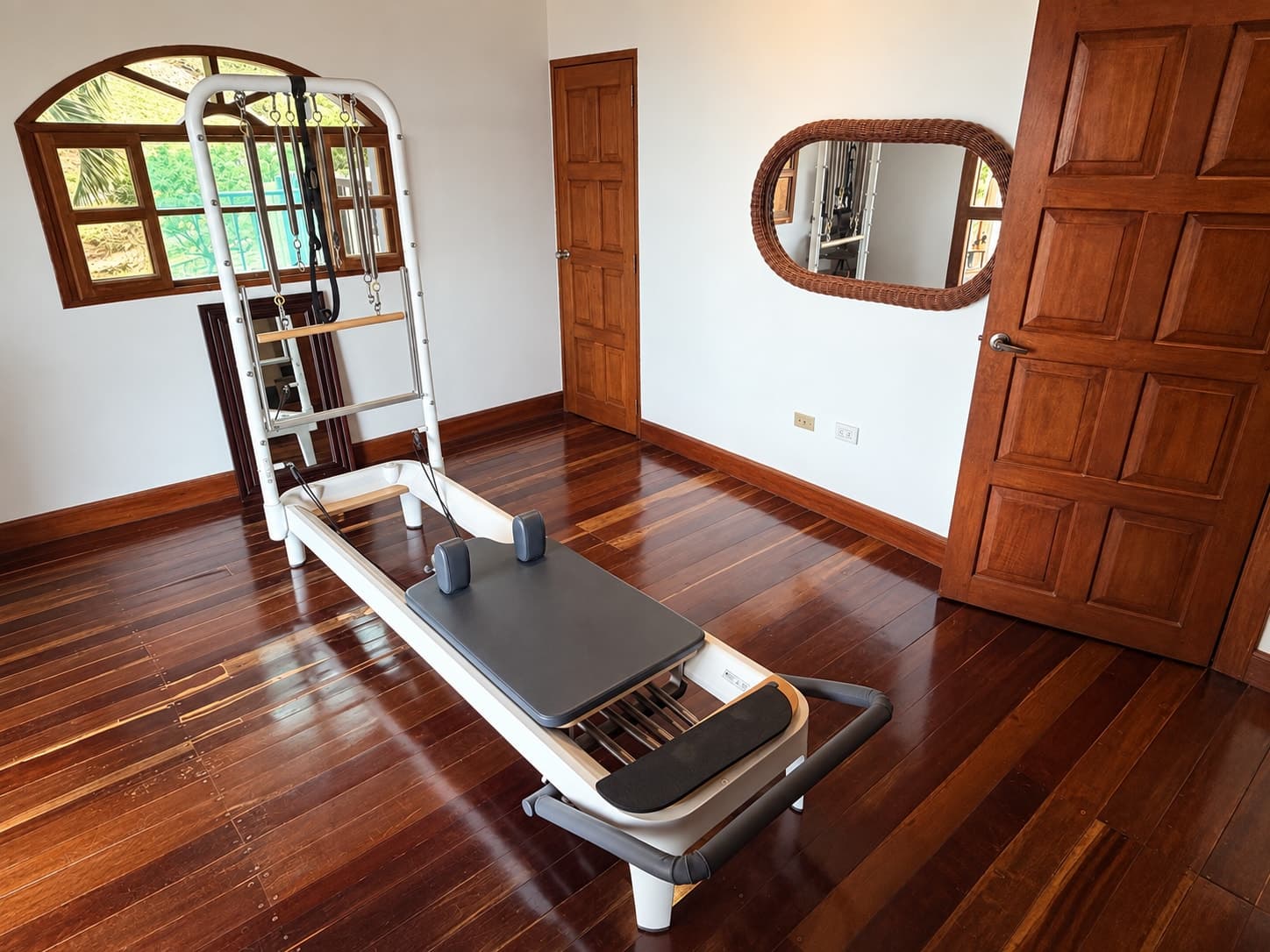
Here there is one reformer and one person on it. That means the spring tension is right for your body rather than approximately right for six. It means the exercise gets changed the moment it stops doing what it was chosen to do, rather than at the end of the block. And it means every repetition is being watched — which is, in the end, most of what you are paying a Pilates instructor for.
What you work on
Whole-body strength, without the heavy external loading that makes some people avoid strength training entirely. Spring resistance lets a movement be loaded exactly as hard as it should be and no harder — useful returning from something, equally useful if you are already strong and want more control over what you have.
Posture and spinal mobility, in the specific sense of keeping them off the machine. Sitting well and moving well are habits before they are capacities, so the work aims at what your spine does for the rest of the day, not only during the hour.
Core control that holds up under ordinary life — carrying, twisting, lifting, standing for a long time — rather than core work measured in how long you can hold a position.
And progression that respects your history. Old injuries, surgeries, a back that has opinions, a knee that only tolerates certain angles: none of that disqualifies you from the work, it just shapes how the work is built.
Never done Pilates before
That is a reason to start privately, not a reason to wait. Everything is explained as it comes, nothing is assumed, and there is nothing to keep up with or fall behind. The first session is mostly about learning how the machine works and how your body responds to it — a slower and far more useful hour than any beginner group can offer.
How the sessions run
Sessions are about 60 minutes and individually programmed — the principles stay fixed, the sequence is built around the person on the reformer that day. Before you start we talk through your body, your goals and your history, and that conversation keeps shaping the programming as things change.
Sessions are booked by message on WhatsApp, and once one is confirmed you will be sent everything you need to get there. If coming to the studio is awkward — you are staying a way out, or you would simply rather not move — the same method travels to you on a mat instead.